The two, compared
Read the two "or" cells before choosing. They are not a formatting quirk — each supplier shipped two printed dimension cards that do not agree, and both figures are reproduced here rather than one being selected. If a specific measurement decides your purchase, message us and we will measure the unit before you order. A page that printed a single confident number would be easier to read and would be making a claim we cannot stand behind.
Manual, and what that actually means
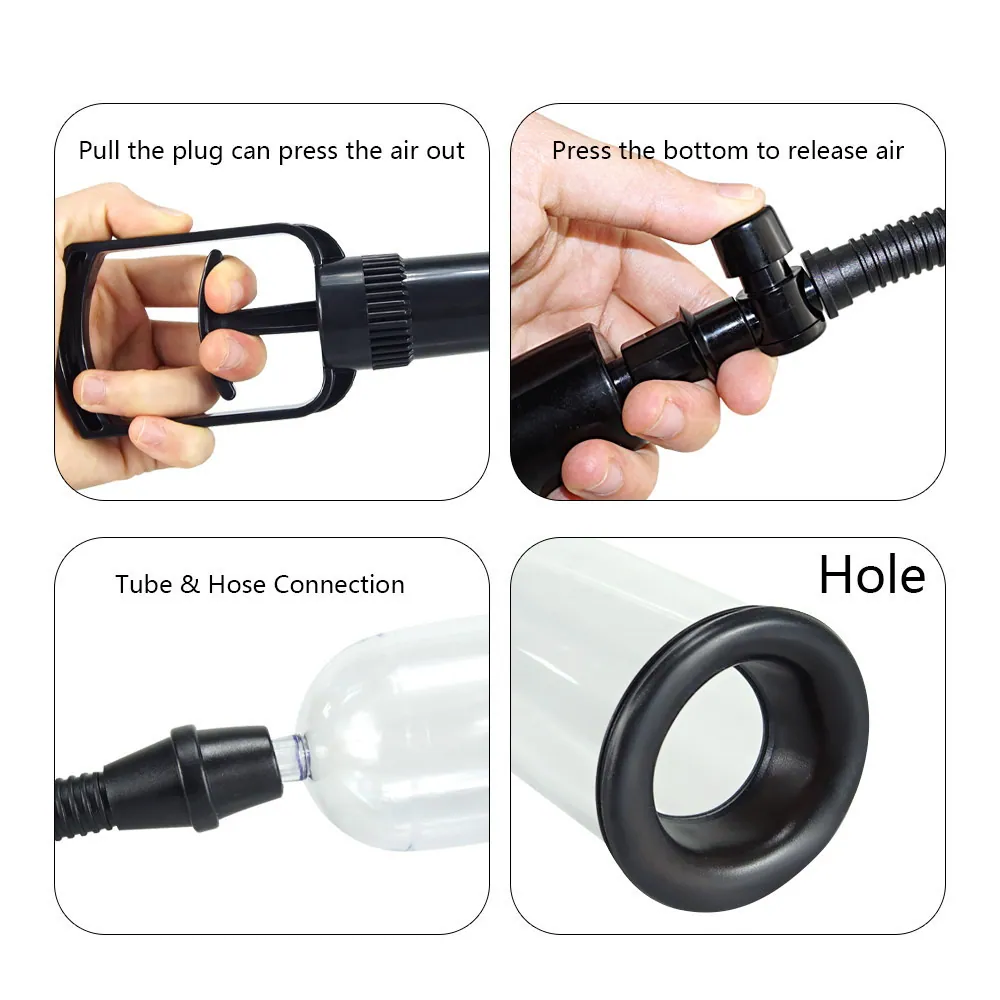
Neither pump has a motor, a battery or a charging port. You squeeze a grip on the hose to draw air out and press a valve to let it back in. Three practical consequences, all of them the reason people choose manual over electric:
- Nothing runs flat. There is no runtime to plan a session around and no charging before use.
- Nothing hums. The only noise is the valve releasing, so a shared wall is not the constraint an electric pump makes it.
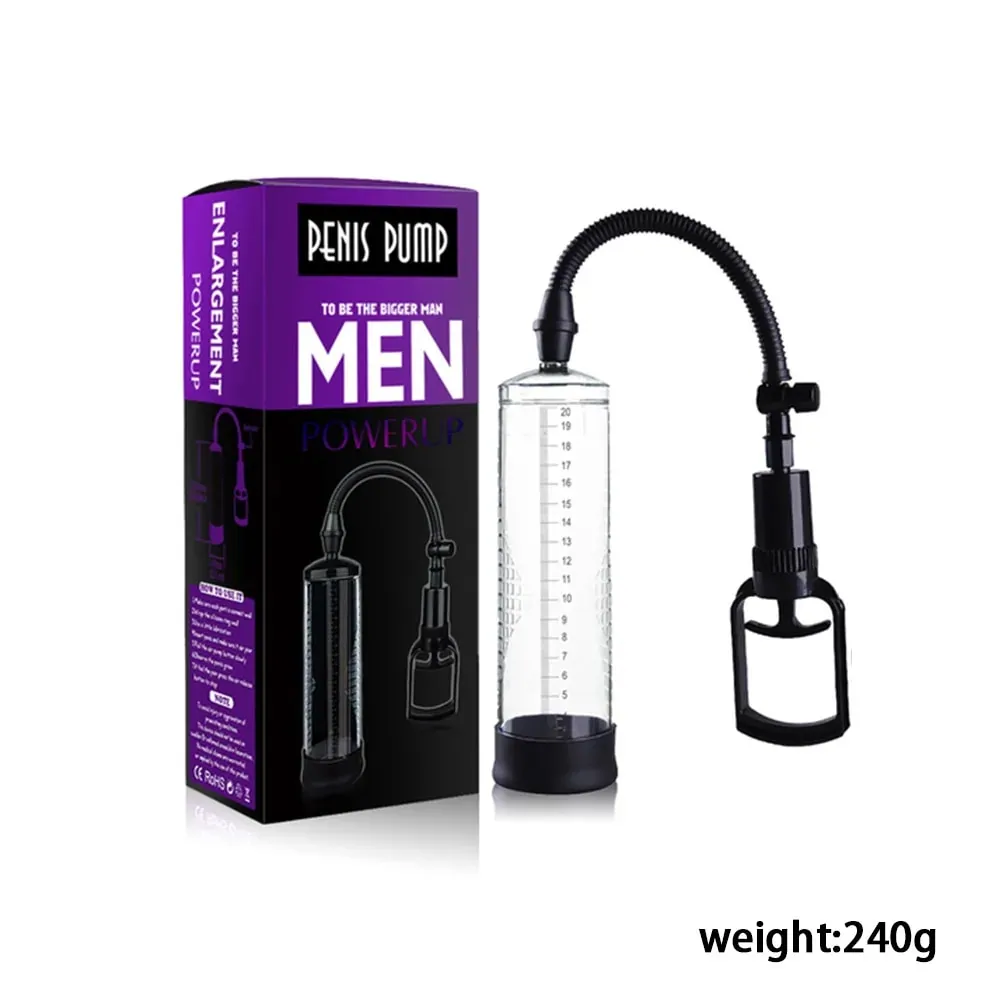
- You set the pressure by hand, not by a setting. That is more control and less repeatability — which is why both cylinders carry a scale, so a level can be found again.
The seal is the part that decides it
Ask anyone who has used one what went wrong, and the answer is almost always the seal rather than the pump. A seal that is slightly too large lets air past the base; a seal that dries out stops seating at all. So the two things worth checking in this category are how many seals ship in the box and what they are made of.
Both products here ship spares: three of them on the hand-grip model, and M, L and XL on the vacuum model. All are silicone. Use water-based lubricant on the seal and nothing else — oil-based lubricant degrades silicone over repeated use, and the first symptom is a seal that will not hold.
Sizing, in plain terms
Bore is the internal diameter of the cylinder, and it is the number that decides whether the pump is comfortable rather than the cylinder length. Both products sit around 58 mm, which is wide enough to clear the shaft without the rim pinching as the seal compresses. A wider bore needs a better seal to hold the same vacuum, which is the trade being made.
Length matters for a different reason: a taller cylinder gives more usable travel on the scale before the seal reaches the top. 205 mm against 220 mm is not a large difference in use, but it is the difference the two cards are arguing about.
What a pump does, and what it does not
A pump draws air out of a sealed cylinder and the resulting lower pressure draws blood into the tissue inside it, which produces temporary swelling for the length of a session. That is the mechanism, and it is the whole of it.
It does not produce permanent change. Before-and-after artwork used to sell pumps is marketing rather than evidence, and we do not reproduce it. Nothing here is a device for any condition. If you have a vascular problem, a urinary problem, or you are taking blood-thinning medication, speak to a doctor before using one of these at all.
Using one safely
Set a limit before you start — 10 to 15 minutes, with a break in between. A manual pump has nothing built in to time a session for you.
Release the pressure at the first sign of pain, tingling, numbness or a colour change. Both products have a release valve for exactly that reason, and using it is not a failure of the session. Never pull a cylinder off against a vacuum; vent it first.
Cleaning
Detach the hose, wash the cylinder and the seals in warm water with mild soap, and wipe the pump body rather than soaking it. Stand the cylinder upside down to drain and air dry — water left in the tube is the usual cause of a smell the next time. Store the hose uncoiled so the ribbing does not take a set.
Buying in the UAE
Both pumps ship from within the UAE in plain, unmarked outer packaging with no product name on the outside, and cash on delivery is available. The minimum order is AED 150, and both products clear it on their own.